

A case study: Replacing golf shoes as an underpronator
This case study follows one recreational golfer with underpronation who needed to replace her golf shoes.
It shows how understanding your stride - and the features of shoes that suit your stride - can help you make a more informed choice, especially when shops and product information do not explain which shoes suit different pronation types.
Note for neutral pronators and overpronators
This case study focuses on underpronation, but the same process can be used by people with neutral pronation, overpronation, or orthotics. The features you look for may change, but the decision-making process is the same: understand your stride, identify what your footwear needs to do, then test the shoe against those needs.

The golf shoes needed to provide traction on grass, stability through the golf swing, and enough comfort for walking several hours on the course.
Meet the golfer
The golfer in this case study has underpronation and high arches. Her existing New Balance Fresh Foam golf shoes had originally been recommended by a podiatrist and had worked well without orthotics.
When they needed replacing, she first tried ordering a similar replacement online — but the new pair caused foot pain by about the fourth hole.
The problem
The experience showed that replacing golf shoes was not as simple as buying the same brand again. Shoe models change, fit can vary, and product pages rarely explain whether a golf shoe may suit underpronation.
Why she went into a shop
She decided to visit a physical golf shop so she could pick up the shoes, inspect the soles, check the uppers, and walk around before buying.
What she needed from the shoes
She needed golf shoes that could provide traction on grass, stability through the golf swing, and enough comfort for walking several hours on the course.
As an underpronator with high arches, she also looked for lace-up shoes so she could adjust the pressure over the top of her foot. She wanted as many underpronation-friendly features as possible: flexibility, enough cushioning, a secure heel, and plenty of room for her foot and toes to move naturally.
For a broader explanation of these features, see the Footwear section on choosing shoe features for underpronation, neutral pronation, overpronation and orthotics.
Quick checklist: golf shoes and stride type
Before going into the shop, it helps to know which features usually matter for your stride type. This case study focuses on underpronation, but the same idea can be adapted for other movement patterns.
Underpronation: Look for cushioning, flexibility, shock absorption, a secure heel, and enough room across the outer foot and toes.
Neutral pronation: Look for balanced cushioning, secure fit, traction, and a stable base without unnecessary correction.
Overpronation: Look for structure, heel support, midfoot stability, and a secure platform that does not collapse inward too easily.
Orthotics: Look for removable insoles, enough depth and width, and a secure heel fit once the orthotic is inside.
See the Footwear section for more about shoe features for underpronation, neutral pronation, overpronation and orthotics.
What happened in the shop
The assistant was friendly but did not offer specific advice about underpronation. He suggested she look around and call out when she wanted to try something on.
That meant the decision-making was largely up to her.
How she shortlisted shoes
She started by picking up the shoes before trying them on. Turning them over and gently flexing them helped her rule out several pairs quickly.
She ruled out shoes that felt too rigid, too narrow, or too firm through the upper. After this first pass, she shortlisted and tried on five pairs. She focused on:
Cushioning — comfortable enough for several hours of walking, but not so soft that the shoe felt unstable.
Flexibility — enough movement to let the foot roll forward naturally from heel to toe.
Inside edge of the shoe — not too firm or controlling, so her foot could still move inward naturally.
Secure heel fit — enough hold at the back of the foot to reduce slipping.
Natural shape and toe room — enough space for the foot and toes to spread.
Laces — useful for adjusting pressure over a high arch.
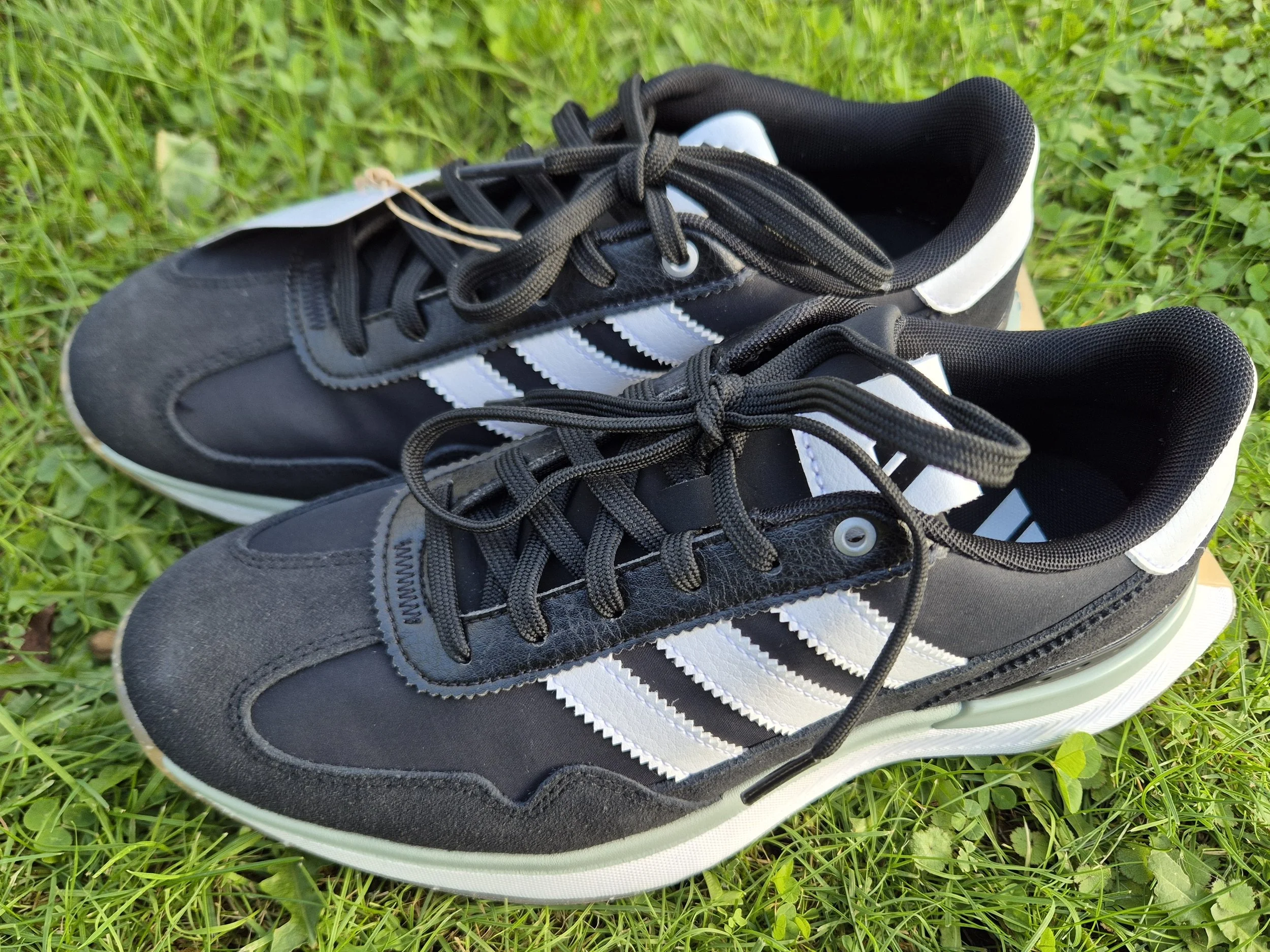
Laces were important because they allowed the fit to be adjusted over a high arch and across the front of the foot.
Brand example: Adidas S2G 26 Textile Spikeless Golf Shoes
One pair stood out because it offered the best balance of golf-course stability and walking comfort.
In this shopping trip, the Adidas S2G 26 Textile Spikeless Golf Shoes appeared to offer enough of the features she was looking for.
Product example note: This is an example only - to help understand the types of features to look for, not as a brand or universal recommendation. Shoe ranges and features change over time, and vary by country,
The on-course test
Playing in the new shoes was not straightforward at first.
For the first few games, she kept her old shoes in her golf bag as a backup. When she noticed discomfort around the outer toes by about hole four, she switched back to her old shoes so she could finish the round.
She used that feedback to adjust the fit before the next game. In particular, she loosened the laces before starting, especially over the top of the foot.
That simple change made the shoes feel roomier and more comfortable across the arch, front of the foot and toes. It also confirmed why laces had been an important feature for her in the first place.
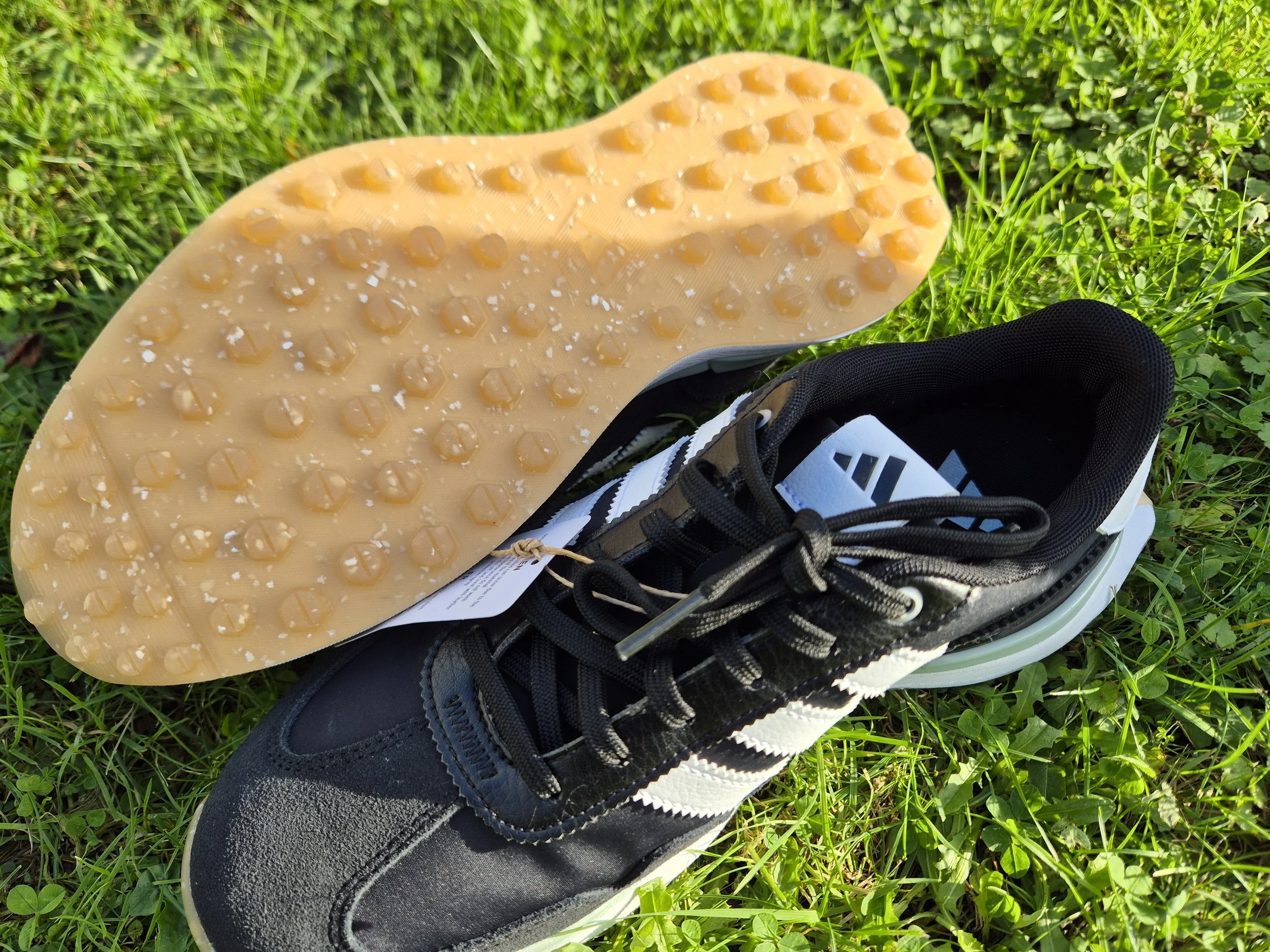
The sole shape and traction pattern were part of the decision-making process, because the shoe needed to work for walking on grass and staying stable through the golf swing.
What the case study shows
This case study shows that pronation-aware shoe shopping is often something the shopper has to bring to the process. A shop may stock good shoes, but that does not mean it will provide guidance about underpronation, neutral pronation, overpronation or orthotics.
If you understand your stride, you can walk into the shop with a clearer idea of what your footwear needs to do. You may not find the perfect shoe, but you can make a more informed choice — and you can keep adjusting based on what happens when you wear the shoes in real life.
For golf, getting the shoe closer to right can make a real difference. You need to walk the course, stand through the swing, rotate, absorb impact, manage wet or uneven ground, and avoid unnecessary fatigue.
Keep exploring
Start here: Learn how to identify your stride type in the Diagnosis section.
Footwear: Look at footwear features for underpronation, neutral pronation, overpronation and using orthotics.
Explore: See how lifestyle scenarios such as walking, indoor comfort and everyday shoes can affect your choice of footwear.
Related post: Finding golf shoes for your stride: underpronation, neutral pronation, overpronation and orthotics.